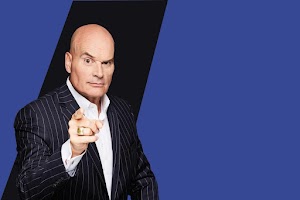


Jake Ferri
4 years ago
I have no case and no one that I need Tim Misney to make pay, just wanted to say the best part of my day is getting to drive by his billboards. His People's Eyebrow is immaculate and the new billboard with him on the motorcycle is downright bitchin'. Thank you Tim Misney for significantly improving the quality of my life.

Jennifer Malainy
4 years ago
My favorite lawyer. Truly one of the kindest, smartest, and most genuine humans I have ever met. There is only one TIM MISNY and he will make them pay!! God Bless.

C M V
5 years ago
I spoke to Amy and Christine about a possible personal injury case involving my father and they were both helpful, professional, knowledgeable and responsive. Although they could not help us with our case, I would highly recommend them!

Stephen Burks
5 years ago
It really comes down to what people say and do when they don't think anyone that matters is listening or they'll get anything in return.
There's the Tim Misny you see on the billboards and on TV, but there's another Tim Misny that I know up close and personal.
The Tim Misny I know is genuinely passionate about helping the hard working little folks who get pushed around the big folks. He actually, really honestly cares about people who run into bad luck at no fault of their own. Tim has quietly, out of the sight of cameras and with no fanfare shared generously with the marginalized in our society; single moms, Veterans and others without expecting anything in return.
He calls them like he sees them and you wouldn't want to take your troubles to anyone else.

mark colucci
5 years ago
Mr. Misny is an angel here on earth and the BEST attorney in Ohio. He has helped my daughter who is in law school when she needed the guidance most. He is a class act, a great family man, and extremely caring. If you need a lawyer in this field I would HIGHLY recommend. There is no other lawyer, in my opinion, better than Tim Misny.
Thank you Tim for being a light in this community!

Damon Mitchell Sr .1st. (The Old-Man !!! Pop's !!!)
5 years ago
Advice on Law question? Also Advise to do more research for Different types of Situations that’s Criminal and Civil Pursuits!
City, State and Above State Level Situation .
Pro Se !

Gianna Colucci
5 years ago
Mr. Misny is the best! I am a 27-year-old single mother, and I am finishing law school in May at Cleveland-Marshall College of Law. When I found myself jobless during the height of the pandemic, I knew I needed help. Going into the legal profession, I wanted to be JUST LIKE Mr. Misny because I knew he was the most successful attorney in the industry. I called him up one day just for the hell of it to see if there was anyway he could help me. I never thought such a big name/reputation like him would respond to me. However, when he learned of my financial situation he PERSONALLY called my cell phone within 5 minutes of my email. Not only has he helped me secure employment, but he continues to teach me every single day what it takes to be the BEST lawyer in the legal profession. I am forever thankful for Mr. Misny. He changed my life. He continues to inspire me every single day, and I am so proud that he took me under his wing and is my mentor. He is the most intelligent, kindest, caring attorney I have ever met, and he is giving me the tools I need to be the most successful lawyer I can be o give my four-year-old son, Gregory, the life he deserves. THANK YOU MR. TIM MISNY. I owe my entire future legal career to you because if you didn't take the time out of your busy day to call me that day and help me when no one else would, I would not have been able to stay in law school. You change lives every single day. Keep being you Tim. There is no one like Tim Misny.

Brandon Hagerdon
5 years ago
I met Tim 6 years ago when he was working with my mother. Since then we were able to stay in touch and build a relationship. I reached out to Tim recently about an opportunity and he was able to connect the dots and help me with this. During this process he gave me his direct number to contact him if need be. If you are in need of any sort of help, I would recommend Tim every time.

Jimmie Graham
6 years ago
Tim is hands down the best lawyer in town. He was able to guide me through the legal process and keep me informed at all stages. Which allowed me to not stress and focus on life. He was able to get me the best deal possible in my court case. One thing that blew me away is that he gave me his direct cell number and answered anytime I had a question which is rare with most lawyers. 100% Misny is the guy! There's a reason he's on literally every billboard in Cleveland.

Paul McFadden
6 years ago
My relationship with Tim goes back over 30 years and is one of great trust and mutual respect. Tim represented me at a critical point in my life and I will always be indebted to him for the difference he made. He is always just a phone call away.

Rick Miller
6 years ago
If I could reach into the sky just to pull more than 5 stars down for a rating I would! I have used other lawyers in the past and it was such a pain to reach them when I needed them. Tim is in all honesty there for you. He gave me his personal phone number, and at anytime or any day he answered. If I had to leave a message I could count to 10 and he would already be calling me back. He also was willing to talk on the weekends! He didn’t just forward me to an impersonal automated system or a person with no experience. I will NEVER use another person for legal advice. He’s gracious enough to give me guidance whenever I have a question. No matter how complex. This may sound like an advertisement but I assure you this man was more in touch when I had an issue than my own family. A reasonable and caring family man who will MAKE THEM PAY!
Thank you Tim

PJ Camargo/Authentik Movement Training
6 years ago
I've had the pleasure of getting to know Tim personally over the past 2 years. Beyond him being an incredible lawyer & 'Jack of all trades ' he is an amazing friend. One thing I love most is that he is family oriented & always making quality time for his loved ones. He inspires me to be a great role model &
father figure one day. Tim loves nature & shares the true beauty of nature with how he raises his kids. From biking through trails & having his kids learn how to nurture the family garden - he teaches valuable lessons on how to appreciate the world we live in. I know that Tim is just a phone call away & always urgent to responding no matter the situation. He has given me some of the greatest advice & continously throwing positive energy my way! I'm honored to know him & be a friend of his. He is the true practioneer of changing lives & paying it forward. He has taught me so much in just a short amount of time. Tim Misny, a man that wakes up every single day to make a difference!

Scott Plate
6 years ago
Tim has created a highly visible and effective law practice, and despite his decades of experience, he has never once forgotten why he got into this business in the first place: to help people. He puts his whole heart into his work, and he works hard for everyone he represents. He has a gift for tuning out the noise and tuning into the core of what his clients need, and making it clear he has heard them. As a result, we feel empowered. He is smart, resourceful, creative, positive, and solution-oriented. His abundant energy makes people feel better, stronger, and valued. He loves and promotes his community; he gives back generously, and he always leaves everything better than he found it. Tim is a true man of action, and a man of his word. Could not recommend him more highly.

Mike M
6 years ago
As a young man, I worked at a local garden center. I came from a family that had too many problems to list. I felt I was never destined to be anything good. I had always wanted to be a police officer since I was a little boy. But, one side of my family told me that I would never be good enough to do it. Anytime I brought it up, they knocked me down until I started to believe that I could never accomplish my dream. One day, about 20 years ago, while working at that garden center, a very tall man came in and asked me to help him select plants. As we walked around the garden center, he struck up a conversation with me. He was very friendly and kind. I was a skinny teenager in dirty blue jeans and a t shirt. This man was dressed very nicely and I was surprised at how nice he was to me. During our conversation, he asked me what I wanted to do with my life after school. I told him that I wanted to be a police officer but many people told me that I’d never make it. I told him how my very own father said I wasn’t smart enough, brave enough, and I was wasting my time. I remember looking at the ground while I explained this to him. The man stopped and got serious. His voice dropped an octave and he looked me dead in the eyes. He pointed his finger at me and told me that I could make anything of my life that I wanted. He told me that it was up to ME to make my life goals come true. He told me to ignore anybody who tells me otherwise. He assured me that if I studied hard in school and never gave up on my dreams that they would become a reality. He told me to say it. I said “I can do it”. In that moment, I thought that if a complete stranger saw something in me, than maybe it could be true.
After I helped him through the checkout and he left, many different employees at the garden center asked me if I knew who that man was. I did not. They told me, “That’s Tim Misny!” Once I figured out “who” Tim Misny was, my confidence grew. It was a pivotal moment. One in which steered the rest of my life. His words stuck with me. I worked hard and obtained my Associate’s Degree in Criminal Justice. I was hired by a local Law Enforcement Agency at the age of 21. I was sent to the Ohio State Highway Patrol Academy, which was an extremely tough place to be, to say the least. At the Academy, they try to break those who don’t have a determined spirit. On days I wanted to quit, I remembered Tim’s words. Maybe it was fate, maybe it was random chance.... I’ll never know But, Tim Misny helped me have the confidence and determination that was necessary to be where I’m at today. I’ve been a law enforcement officer for over 16 years. I’ve told this story to many of my coworkers.
Tim, you’ll never understand how your words that spring day helped shape my future. Your words enabled me to provide a great life for myself and my family. I’m forever grateful.
Mike

Eric Evans
6 years ago
Tim has represented me twice, once 30 years ago and again just recently. I was too young to fully appreciate his expertise when he represented me the first time (as i was a minor who was the victim of an accident - he won for us, incidentally), but I'm old enough and wise enough now to really appreciate how truly great he is. First off, how many attorney's actually give you their cell phone number and actually answer? I would contend very, very few. Secondly, he has a street fighter mentality combined with a sharp legal intellect which makes you immediately think "I'm so glad this guy is on my side." I was really in a bind recently and Tim came through in spades - he is THE person I would call if I were in trouble or needed help - at a minimum he would know who I should talk to and direct me there (he knows his own limits, which is the key to a wise person) - at a maximum he would take on my fight himself and I'd have full confidence in his ability to deliver the best possible outcome for me - he fights for you like you're family - can't say it better than that.

Benjamin Firstenberg
6 years ago
I worked as an intern for Tim the summer of 2017 and it was an unbelievable experience both for my career and personal development. He treats his employees with a level of respect, appreciation and honesty that I've truly not seen anywhere else that I've worked. We've stayed in touch these past few years and I'm still learning from Tim, whether it be the way he sees the world, his career advice or his commitment to his family. He's an honest man who treats people honorably.

David Shelton
6 years ago
I don't know much about Tim the lawyer, but I do know about Tim the man. Tim the man befriended me as a youth and gave me the motivation to excel in school. Tim the man wrote the letter that got me into college and got me a helpful scholarship. Tim the man gave me an internship while in college. Tim the man has been a friend to me for over ten years. He makes himself available day or night whether I need advice or just want to talk about the day. There a lot of stigmas about attorneys (and they are earned) but Tim Misny bucks the stereotype. And if Tim the lawyer is half a good as Tim the man, he will live up to his word, and make them pay.

Mike Mercer
7 years ago
WOW! It is the only way to describe the tremendous experience I was afforded, when I contacted and then retained Tim Misny, to handle a case for me. I had been injured in an automobile accident and needed help and direction, Tim and his staff provided both.
The personal attention and clarity of the matter and specifics, gave me a state of comfort and satisfaction that I could have found nowhere else! I will be forever grateful to have Tim Misny as my attorney and my friend!
I am a businessman in the Greater Cleveland area and have directed various members of my staffs as well as personal friends to Tim for solutions to their personal injury case needs. All my referrals have been more than pleased with the service and personal treatment they have received from Tim and his staff.
I strongly recommend Tim Misny and his associates should you ever need the finest legal services available in Ohio! Trust is his number one priority, trust in knowing that you will be his client second, his friend first!